Thai Fire Meets Indonesian Funk: My Southeast Asian Awakening
From Louisiana bayou heat to California's Indonesian secrets—chased bold Southeast Asian flavors across 15k miles. Song Phi Nong's wok hei, Medan Kitchen's rendang depth. Learned the hard way about spice levels, shrimp paste, and lemongrass magic.
Thai Fire Meets Indonesian Funk: How Southeast Asia Ruined Me for Bland Food
Gonna be honest: Southeast Asian food intimidated the hell out of me for years. All those ingredients I couldn't pronounce—galangal, makrut lime, terasi. Spice levels that seemed designed to hurt you. Fish sauce in everything.
Then summer 2024, post-software quit, I'm driving through Louisiana's bayou heat and stumble into this tiny Thai spot in Houma. Ordered pad Thai at spice level 3 thinking I could handle it. Sweated through my shirt, chugged three waters, wanted to die. But underneath that pain? Layers of flavor I'd never experienced—sweet, sour, salty, spicy, all at once, everything balanced.
That kicked off my Southeast Asian education. Drove 15,000 miles total, chased these bold, aromatic cuisines from Louisiana to California. Learned about wok hei (that smoky breath-of-the-wok char), rendang (slow-cooked until the sauce disappears), and why lemongrass changes everything.
These two spots—one Thai family kitchen, one no-frills Indonesian takeout counter—taught me that "spicy" isn't about pain tolerance. It's about complexity. About building flavor in layers until your brain short-circuits trying to process it all. This is the messy truth about my Southeast Asian awakening. Let's dive in.
The Five Flavor Pillars (That I Learned By Screwing Up Orders)
Western food tends to build flavors one at a time—salt here, acid there, maybe some spice if you're feeling wild. Southeast Asian cooking throws everything at you simultaneously and somehow makes it work.
Here's what I figured out after eating way too much and paying attention:
Spicy
Fresh Thai bird's eye chilies, dried chili flakes, chili paste. Not just "hot"—different chilies bring different flavors. I learned this by ordering level 5 at Song Phi Nong and genuinely questioning my life choices while simultaneously craving more.
Sour
Lime juice, tamarind, green mango. That mouth-puckering acidity that wakes everything up. First time I had proper tom yum soup, the sourness surprised me—but it balanced the richness perfectly.
Sweet
Palm sugar, coconut sugar, sometimes the natural sweetness of fresh seafood or coconut milk. Not candy-sweet—subtle background sweetness that rounds out the edges.
Salty
Fish sauce, soy sauce, shrimp paste. This was my biggest hurdle. Fish sauce smells funky as hell in the bottle but adds this deep umami that makes everything else pop. Trust the process.
Bitter/Umami
Certain herbs, charred ingredients, fermented pastes. That funky, earthy, hard-to-describe flavor that makes your brain go "wait, what is that?"
A perfect dish hits all five notes. Pad Thai, rendang, tom yum soup—they're all playing with this same five-flavor balance. Once you understand that, everything clicks.
Song Phi Nong – Houma, LA (Where I Learned About Real Thai Heat)
- Address: 719 Corporate Dr, Houma, LA 70360
- Phone: (985) 262-8687
- Story: Family recipes brought directly from a Thai village, not Americanized
- Vibe: Cozy, unpretentious, family-run warmth
- Can't Miss: Pad Thai, Drunken Noodles (Pad Kee Mao)
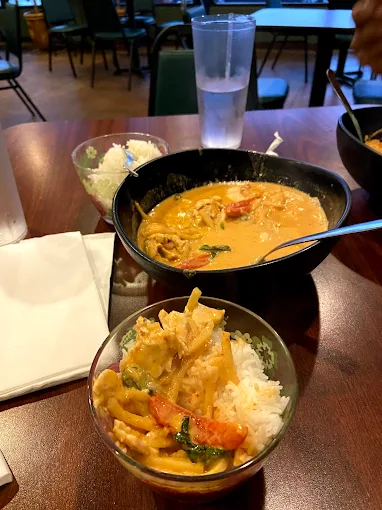
Found this place by accident in August 2024. Louisiana humidity at its worst—that thick air that makes breathing feel like work. Perfect timing to eat spicy noodles, right? (My logic has always been questionable.)
It's run by siblings who brought their family's recipes from an actual Thai village. Not the sweet, ketchup-red Americanized versions you find at chain restaurants. The real deal.
First visit: ordered pad Thai at level 3 spice thinking I was tough. I was not tough. Sweat poured down my face, I went through three waters, my nose ran. The table next to me—a Louisiana local—laughed and said "you ordered WHAT level?" Apparently level 2 is where most mortals start.
But here's the thing: underneath that pain, the flavor was incredible. Not just "spicy water"—that perfectly balanced dance of tamarind's sourness, palm sugar's sweetness, fish sauce's savory depth. The noodles had this slightly charred taste from the wok (later learned that's called wok hei—breath of the wok). Peanuts adding crunch, lime cutting through the richness.
Went back three more times before leaving Louisiana. Learned my lesson: ordered level 2. Much better experience. The drunken noodles (Pad Kee Mao) became my go-to—wide rice noodles with that intoxicating wok hei, Thai basil everywhere (fresh, not dried—huge difference), serious chili punch but manageable.
The family vibe here is real. They remember regulars, ask how spicy you want it without judgment, genuinely care that you enjoy the food. Parking's easy, call ahead for groups over four.
Spice level guide from someone who learned hard way: - Level 1-2: Normal human range - Level 3: Painful but you'll survive - Level 4: Chili-head territory - Level 5: Why would you do this to yourself
Indonesian Food: The Funk I Didn't Know I Needed
If Thai food is about bright, punchy flavors that hit you immediately, Indonesian food is about depth. About slow-cooking until flavors develop this dark, rich complexity.
My first Indonesian food experience was actually in LA years ago—some food court rendang that was... fine. Didn't get the hype. Then I found Medan Kitchen and understood what I'd been missing.
Indonesian cuisine, especially from North Sumatra (Medan is the capital), uses a LOT of aromatics and spices cooked for a LONG time. Coconut milk reduced until it's nearly dry. Spice pastes that took hours to make. Shrimp paste that smells funky but adds this deep umami.
It's not trying to be refreshing like Thai food. It's comfort food—rich, warm, the kind of food that sticks to your ribs and makes you want a nap after.
Medan Kitchen – Rosemead, CA (The Indonesian Education)
- Address: 8518 Valley Blvd STE 102, Rosemead, CA 91770
- Phone: (626) 693-6231
- Focus: North Sumatran Indonesian food
- Setup: Primarily grab-and-go takeout counter
- Don't Leave Without: Rendang beef, Nasi Bungkus
This place is tiny. Like, maybe four seats tiny. Primarily a takeout counter in a strip mall in Rosemead. Could easily miss it if you weren't looking.
Walked in September 2025, no idea what to order. Display case full of various dishes—some I recognized (fried chicken), some I didn't (dark brown meat in nearly dry sauce). Asked the person behind the counter what was good. She pointed to the rendang beef: "This one. Very popular."
Rendang is this Indonesian dish where beef gets slow-cooked in coconut milk and spice paste for HOURS—like 4-6 hours—until the sauce reduces to almost nothing and the meat absorbs all those flavors. Dark, tender, intensely flavored chunks of beef.
First bite: my brain struggled to process all the layers. Coconut richness, warm spices (cinnamon, cardamom, coriander), lemongrass, galangal (ginger's more intense cousin), chili heat building slowly. Not punchy like Thai food—deep and complex, unfolding as you chewed.
Also ordered nasi bungkus—rice wrapped in banana leaf with sides. The banana leaf imparts this subtle, grassy aroma to the rice. Came with fried tempeh, sambal (chili paste), and some vegetables. Portable feast situation.
The "seating" situation here is basically non-existent. This is a takeout spot. Call ahead because popular dishes sell out—especially the rendang. I showed up once at 2pm and half the display case was empty.
They also have a small Indonesian grocery section—shelves with kecap manis (sweet soy sauce), sambal varieties, spice pastes. If you want to try cooking this stuff at home, this is your source.
Strategy: Point at what looks good in the display case, ask them to explain it, trust their recommendations. They know what's fresh and what's fire.
Ingredient Decoder (What I Wish Someone Told Me Earlier)
These ingredients used to intimidate me. Now I actively seek them out. Here's what they actually are:
| Ingredient | What It Is | What It Does (Mike's Translation) |
|---|---|---|
| Galangal | Rhizome related to ginger | Like ginger but sharper, more piney-citrus. Cuts through richness in Thai soups. Can't really substitute regular ginger. |
| Lemongrass | Tall grass stalks | Bright, lemony, floral flavor without the acidity of actual lemon. Transforms everything. Bruise it to release oils. |
| Kecap Manis | Indonesian sweet soy sauce | Thick like molasses, sweet-savory. Essential for Indonesian fried rice and many stir-fries. Not the same as regular soy sauce. |
| Terasi/Shrimp Paste | Fermented shrimp paste | Smells funky as hell. Adds deep, funky umami that makes everything else pop. Small amounts go far. |
| Makrut Lime Leaf | Leaves from makrut lime tree | Intensely aromatic lime fragrance. Used whole in soups/curries, then removed. Or sliced super thin as garnish. |
The first time I smelled shrimp paste, I thought something had gone bad. Turns out that's just how it smells. In the dish? Magic. Trust the funk.
Why These Beat Chain 'Pan-Asian' Restaurants
You know those restaurants with menus that have Thai, Vietnamese, Chinese, and Japanese all on one menu? Yeah, they're usually mediocre at everything.
| Factor | Real Deal Spots | 'Pan-Asian' Chain Nonsense |
|---|---|---|
| Ingredients | Actual fresh herbs, real coconut milk, authentic spice pastes made from scratch | Powdered mixes, fake coconut flavor, dried herbs, shortcuts everywhere |
| Flavor Depth | Layered, complex, balanced—you can taste every element | One-dimensional, usually just salty or sweet, no balance |
| Price | $12-20 per dish | $15-25 and you leave disappointed |
| Portion Size | Generous, actually fills you up, often have leftovers | Standardized small portions designed for profit margins |
You're paying similar or even less money for exponentially more flavor and authenticity. Plus you're supporting actual family-run spots instead of corporate restaurant groups.
Questions People Keep Asking Me About Southeast Asian Food
What's the actual difference between Thai and Indonesian food?
Thai food emphasizes bright, fresh, immediate flavors—lots of lime, fresh herbs, quick cooking. Indonesian food (especially Sumatran) is richer, deeper, slow-cooked until flavors develop this dark complexity. Both amazing, totally different approaches to building flavor.
What the hell is rendang and why is everyone obsessed with it?
It's this Indonesian dish where beef gets slow-cooked in coconut milk and complex spice paste for 4-6 hours until the liquid evaporates and the meat absorbs everything. Tender, dark, intensely flavored. It's a masterclass in patience. Once you have good rendang, you get the obsession.
Is all Thai food super spicy or can I actually eat it?
Not all Thai food is spicy. Dishes like Massaman curry or some pad Thai styles are pretty mild. The beauty is you can usually customize spice level. Just... start at level 1 or 2. Don't be a hero like I was.
What's wok hei and why do people care so much?
It's that smoky, slightly charred flavor you get from stir-frying in a blazing hot wok. You literally can't replicate it at home unless you have restaurant-level firepower. It's essential for great pad Thai and drunken noodles. You'll know it when you taste it.
Are there vegetarian options at these spots?
Song Phi Nong can make many dishes vegetarian with tofu instead of meat and no fish sauce (though fish sauce is kind of essential to Thai food, so it'll taste different). Medan Kitchen is more meat-focused—they might have vegetable sides and tofu dishes, but you'll need to ask.
What is nasi bungkus and why is it wrapped in banana leaf?
It's Indonesian rice with various side dishes, wrapped in banana leaf. The leaf imparts this subtle, grassy aroma to the rice and keeps everything moist. Plus it's portable—original Indonesian to-go container. Unwrap it, eat everything, throw away the leaf. Genius.
How do I actually order at Medan Kitchen if I don't know what anything is?
Counter service. Look at the display case, point at what looks interesting, ask them to explain it. They're used to confused Americans. Don't be shy—the staff knows what's good and what's selling out fast.
What should I drink with spicy Southeast Asian food?
Thai iced tea or iced coffee—the sweetness cuts the heat. Or a crisp lager like Singha (Thai) or Bintang (Indonesian). Avoid wine unless you know what you're doing—the spice and acidity make most wines taste weird.
I have a nut allergy. Can I eat Thai food?
Many dishes use peanuts or are cooked in facilities that handle nuts. You MUST tell your server about allergies before ordering. This isn't something to mess around with—cross-contamination is real in small kitchens.
What's sambal and why are there so many kinds?
Sambal is a generic Indonesian term for chili-based sauces or pastes. There are literally hundreds of regional varieties—some are just straight chili fire, others are sweet, some have shrimp paste, some have lime. They range from "mild garnish" to "why did I do this to myself." Ask before drowning your food in it.
Do I need reservations at these small spots?
Song Phi Nong: call ahead for groups over 4-5 people, otherwise walk-in is fine. Medan Kitchen: it's all takeout/walk-in, first come first served. Popular dishes sell out though, so earlier is better.
Can I buy ingredients to cook this stuff at home?
Medan Kitchen has a small Indonesian grocery section with essential ingredients. For Thai stuff, find an Asian grocery store—you need the real ingredients, not supermarket substitutes. Dried lemongrass is NOT the same as fresh.
The Southeast Asian Challenge
Here's the thing about Southeast Asian food: it doesn't coddle you. It demands that you pay attention, that you handle some heat, that you trust flavors you might not recognize. It challenges your palate in the best way.
If you've never had real Thai or Indonesian food—not the Americanized versions, the REAL stuff—you're missing out on some of the most complex, satisfying flavors on the planet.
Pick one of these spots. Or find your own family-run Southeast Asian place. Order something that scares you a little bit. Start at spice level 2. Let the layers of flavor unfold.
Email me at contact@eatat.us when you finally understand what wok hei tastes like. Or when you discover rendang and realize you've been sleeping on an entire cuisine. Or when you accidentally order level 5 and regret everything but can't stop eating.
My Subaru smells like lemongrass now, mixed with the eternal french fry funk. Worth it.
Related Guides
The Disasters: Worst Meals of 35,000 Miles (What NOT to Do)
After 400+ restaurants, here's the ugly truth—food poisoning in New Mexico, $40 tourist trap garbage...
Read more
Tex-Mex Burnout to South American Fire: My Grill Awakening
Burned out on tacos after years on the road, I discovered Peruvian ceviche and Argentine asado that...
Read more